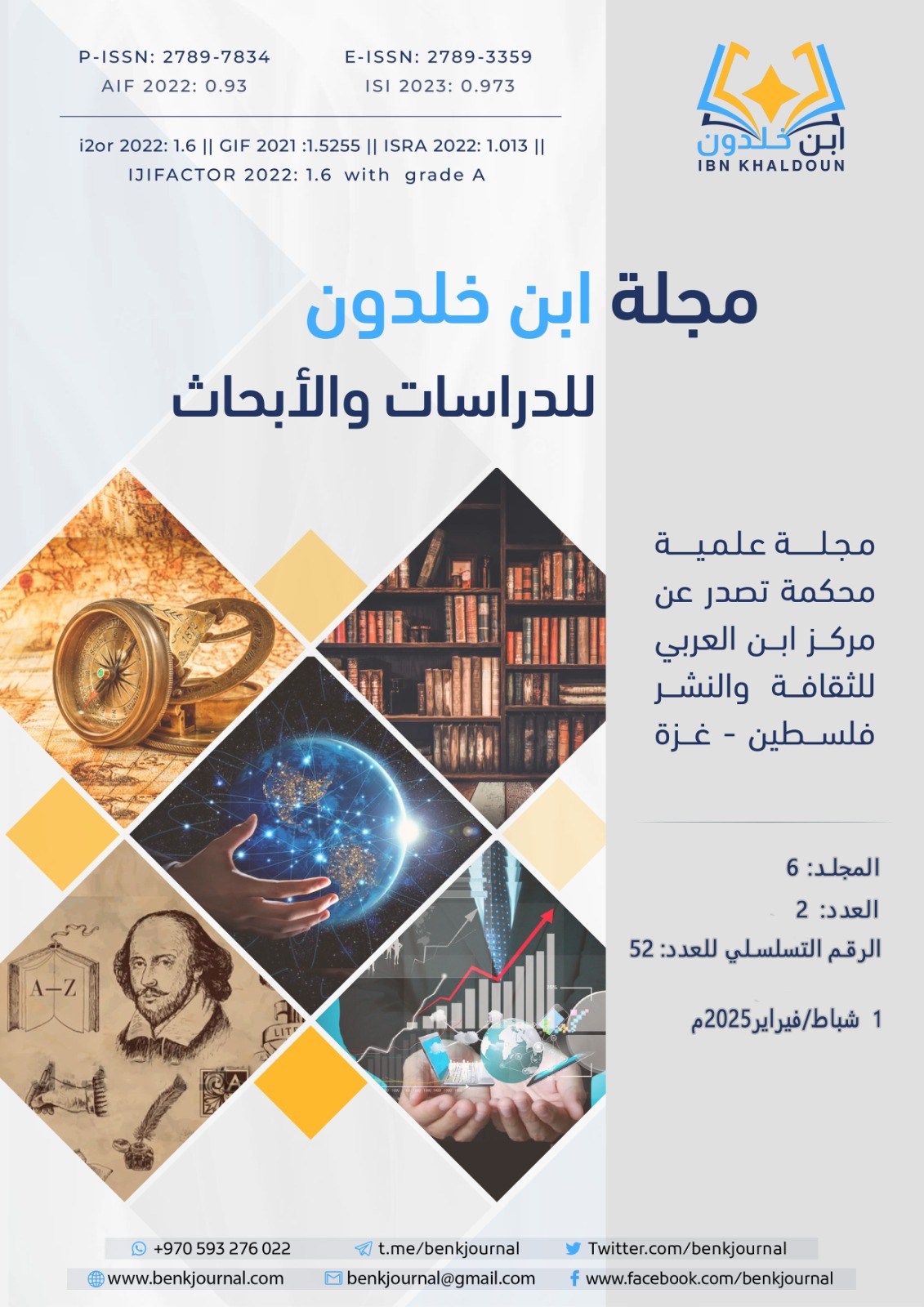
Tunisian educational policy in facing educational phenomena: private tutoring as an example
DOI:
https://doi.org/10.56989/benkj.v6i2.1768Keywords:
Comparative education, public perception, Regulatory measures, Policy implementation, educational phenomena, Private tutoring, Tunisian educational policyAbstract
This study aims to examine the measures undertaken by Tunisian educational policy against private tutoring, by analyzing the mechanisms of this confrontation and the public’s reception of it. These mechanisms, at least on the surface, have been limited to the legal orders published in the Official Gazette, specifically the Government Order of 1988 and the Government Order of 2015, as well as the ministerial notice issued by the Ministry of Education on November 12, 2024. This requires a careful understanding of these documents and an analysis of their internal and external structures from a critical perspective. The study does not stop at examining these regulatory texts; it also addresses how the public perceives this confrontation, by considering a range of Facebook comments related to the topic. Through this dual analysis of legal texts and public reactions, the study concludes that the confrontation with private tutoring remains limited in effectiveness, both theoretically and in practice. This limitation stems from the fact that these measures lack a solid strategic foundation, which diminishes their legitimacy in the eyes of the majority of the public. Therefore, it is necessary to consider new strategic approaches that address the phenomenon of private tutoring at its root and draw on comparative experiences at the international level.
References
Downloads
Published
Issue
Section
License
Copyright (c) 2026 Ibn Khaldoun Journal for Studies and Researches

This work is licensed under a Creative Commons Attribution-NonCommercial 4.0 International License.